College graduates last year entered the workforce with $35,051 in student debt on average.
It is common to meet college graduates with over $75,000 in student loans, even $90,000. They will be paying on these loans for the next 30 years. Many of these students will be approaching 60 when they are debt free. But if their housing costs were reduced, and they made a decent living wage, perhaps they could afford to send extra payments every month to their student loans, thereby reducing the terms by years.
Employers could provide matching student loan debt payments to help employees quickly pay off their debts. Some employers are doing this nationally. Next year, the health insurer Aetna will start matching employees student loan payments, paying up to $2,000 annually with a $10,000 lifetime maximum.
If you have $30,000 in student debt, you could pay it all off in five years with aggressive payments of $579.98 per month (6% interest), according to a loan calculator at bankrate.com. Let’s say during that same five-year period, you automatically invest $420 per month into the Standard & Poors 500 Index every month through a brokerage account at Charles Schwab or TD Ameritrade. If you earn a 10% annual rate of return, you will have $33,214.60 in five years. This five-year plan requires $1,000 per month going into debt service and investments. You may have to work overtime or a second job. In five years, your debt is paid off and you have a substantial investment account. With that substantial savings, you could buy a house, start a family, open a business or go on an extended vacation.
Let's say you have $60,000 in student debt at 6% interest. If you sent $1,159.97 per month to the loan, you would pay it off in five years. To pay off the same loan in 10 years, you would have to pay $666.12 every month. To pay off $60,000 at 6% interest over 30 years, the payment is $359.73. Most people fear they cannot afford to make a payment of $1,159.97 per month, but if you could find a way, you could cut your loan's term from 30 years to five.
It is cheaper to live in Topeka than many other places around the world. If Topeka can market itself as better living for less expense, many people would consider staying here or moving to Topeka from another community. Topeka has to market itself as a dynamic place to live and work, with affordable housing and support for cycling, organic foods, craft beer, music, entertainment and the arts.
Don’t be a slave to a student loan for the rest of your life. Instead, work hard, live cheap, and use discretionary income to pay down debt quickly and save money. You will get ahead faster in life without debt. With no debt, your world gets larger because you can afford to do more than just slave away for the bankers.
Berkshire Hathaway trades like a financial, but should be considered a congolomerate.
The company gets most of its earnings from its non-financial businesses.
The stock has 17% upside if the market realizes it's erred in valuing the company.
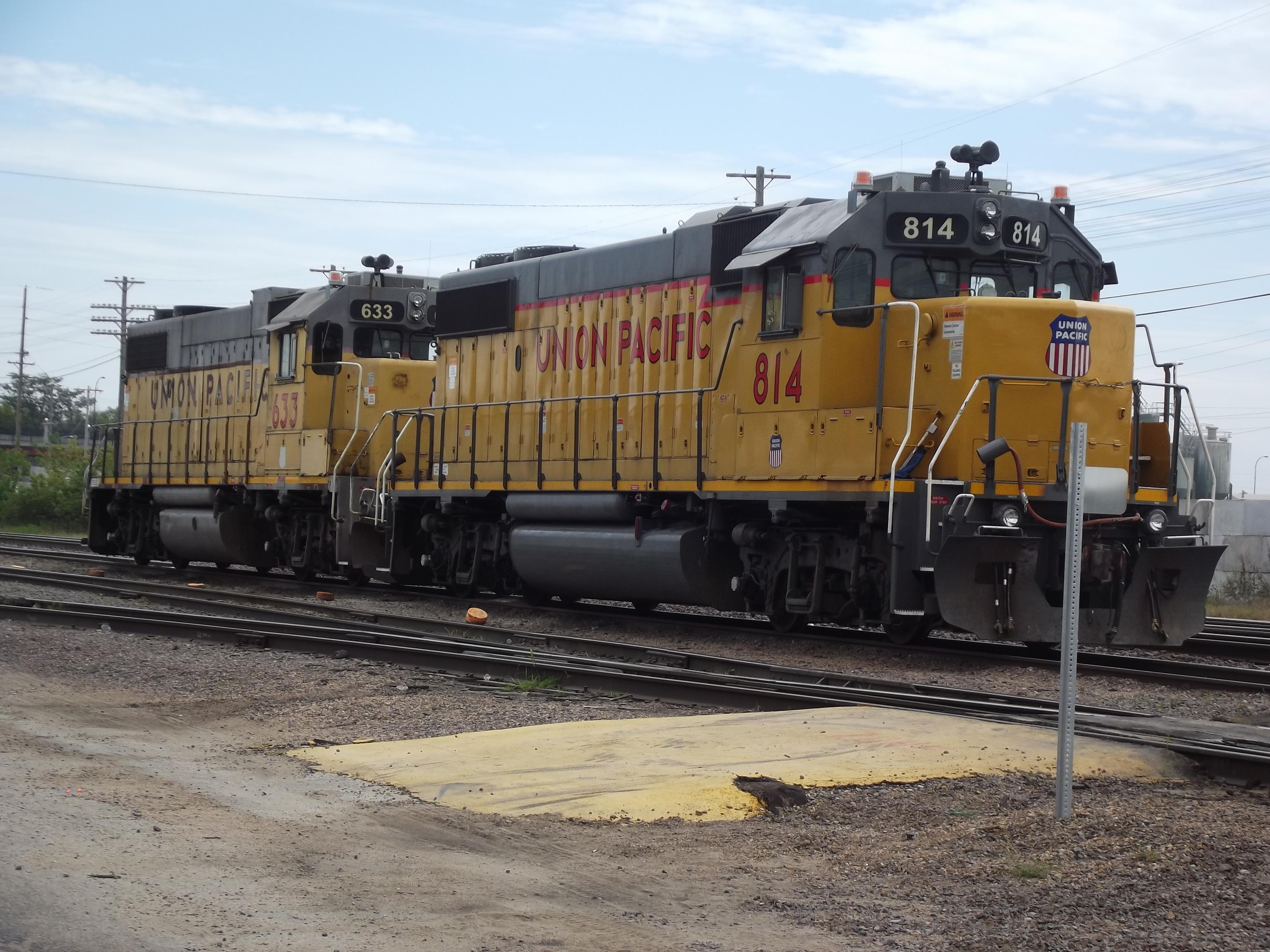
962 FollowersI made four day trades with Union Pacific yielding $811.83.
I made four day trades with Union Pacific yielding $811.83.
Union Pacific's bottom is around $88 per share.
Jesse Livermore loved trading UNP.
I have been a long-term investor for 23 years. I stayed away from day trading because of its higher risk/reward potential. I was conservative, I bought solid companies like Berkshire Hathaway (BRK.A) (BRK.B), Union Pacific (UNP) and Church & Dwight (CHD) and held on through good times and bad times. I was rewarded for being patient.
However, I have always been intrigued by day trading after reading an article about a trader in The Omaha World-Herald by my friend Jim Rasmussen. The story, published in the 1990s, focused on a rock musician who played in bands at night and worked as a day trader during the day. The trader made and lost thousands, but generally made money. At one point, he was up over $60,000 and decided to cash out and pay off his mortgage.
Photo by Michael Hooper
I spent several months studying trading techniques. I talked to my broker about the requirements at Charles Schwab. I was told I need a minimum $25,000 in my account to do day trading.
After Union Pacific's third quarter earnings came out, the stock fell from $93 per share to $88 per share. I've owned UNP for many years and know the company well. I like the stock because I feel the downside is minimal at this point. The company is strong financially and its volumes have improved in recent weeks. I feel there is a bottom around $88 per share.
In the third quarter, UNP offset the loss of coal volumes with gains in productivity and pricing. Union Pacific's total traffic was down 2% in Week 43 with 171,009 carloadings. This beats trends early in the year when Union Pacific volumes were falling 9% to 10%. Farmers raised another big crop this year. Grain volumes were up 20% for Union Pacific in Week 43, up 21% fourth quarter to date and up 10% year to date, to 301,108 carloads.
The Big Trade
On Oct. 31, I decided to buy 4,000 UNP shares at $88.6582 per share. I am looking for $0.07 to $0.09 profit per share. Nine cents would yield $360.00 profit. When I placed my first trade, my heart started racing; I was filled with fear and excitement. The stock immediately fell and I was down $900. Yikes. I held on. The stock returned to the $88.60s and then ran into the $88.70s and I sold at $88.7448, for a profit of $320.76 after commissions.
I did a similar trade three more times this week, always in the morning, when there are a lot of bulls and bears chasing this stock. The stock moves quickly up and down. I have to stay in front of the trade or I will lose. I avoided trades late in the day in case there was not enough time for the stock to move. I made $94.36 on my second trade. I made $334.35 on my third trade.
The range in Union Pacific is staggering. In the first hour of trading Friday, the stock opened at $88.70 but quickly fell to $88.38, then reversed course and climbed all the way to $89.23 before pulling back. All I need is $0.09, and I'm good. I bought 4,000 shares at $88.78 and then quickly sold at $88.802. I made $62.36 after commissions. I should have held on a little longer.
Each time, I held the stock less than 20 minutes, sometimes only a few minutes.
I made a total of $811.83 in profit. I will have to pay taxes on short-term gains, which will likely be around 30%, which would reduce my profit to around $568.28.
What's interesting is that while I did these trades four times in five days, these trades could have been duplicated multiple times each day. My first trade could have been duplicated three times in the same day, I only participated in the trade once that day. My friend Chris Wright, a Topeka businessman, said the real challenge for any investor is holding onto a profit. Too often we quickly gamble it away. So after each profitable trade, I walked away. I had no losing trades, although I was prepared to sell out and cut my losses to -$1,000 if I had to.
Jesse Livermore, the famous trader behind the book, "Reminiscences of a Stock Operator," also traded heavily in Union Pacific in the early 1900s, he bought and sold thousands of shares of UNP. He was actually alive and working when The Chicago Cubs won the World Series in 1908. Livermore gambled big and became a millionaire but lost his fortune near the end of his life. I don't want to become the next Jesse Livermore, no way.
But his trading observations are useful. "It takes a man a long time to learn all the lessons of all his mistakes. They say there are two sides to everything. But there is only one side to the stock market; and it is not the bull side or the bear side, but the right side," says page 36 of "Reminiscences of a Stock Operator."
Day trading is extremely stressful and not for the weak at heart. The best trader is a master of Intellect/Emotion, meaning the trader operates with a set of rules that works for him or her and sticks by them, regardless of emotion. I have a loss limit of $1,000. If a trade goes south, I will sell out and cut my losses. I think it is best to focus on one stock that you know very well. You understand the company, you can predict its earnings and you know when it is overvalued or undervalued.
I think it is possible to incorporate day trading into part of a much larger portfolio strategy, but I wouldn't recommend day trading for most investors. My default strategy is to remain invested in my core holdings of stocks, bonds and ETFs. I am overweight the S&P 500 because its performance beats most money managers. When I see a core holding like Union Pacific fall into a trading range, I might consider a possible day trade. If the market is ripe for a good trade, I will do it. But if conditions look sour, I'm staying away.
I like Schwab's StreetSmart Edge technology because it shows all the bids and asks with some market depth. This helps me get a feel for where the trades are going. When I place a trade I watch it like a hawk. I will not leave my desk until it is done. If the stock is volatile, it is possible to enter and exit my trades in less than 10 minutes. There is a lot of volatility in the market because of the presidential election. And volatility is good for traders.