Monday, November 7, 2016

Kansas Trader Profits From Day Trading In Union Pacific Stock


My Experiment With Day Trading

Michael Hooper
962 FollowersI made four day trades with Union Pacific yielding $811.83.
  • I made four day trades with Union Pacific yielding $811.83.
  • Union Pacific's bottom is around $88 per share.
  • Jesse Livermore loved trading UNP.

I have been a long-term investor for 23 years. I stayed away from day trading because of its higher risk/reward potential. I was conservative, I bought solid companies like Berkshire Hathaway (BRK.A) (BRK.B), Union Pacific (UNP) and Church & Dwight (CHD) and held on through good times and bad times. I was rewarded for being patient.

However, I have always been intrigued by day trading after reading an article about a trader in The Omaha World-Herald by my friend Jim Rasmussen. The story, published in the 1990s, focused on a rock musician who played in bands at night and worked as a day trader during the day. The trader made and lost thousands, but generally made money. At one point, he was up over $60,000 and decided to cash out and pay off his mortgage.
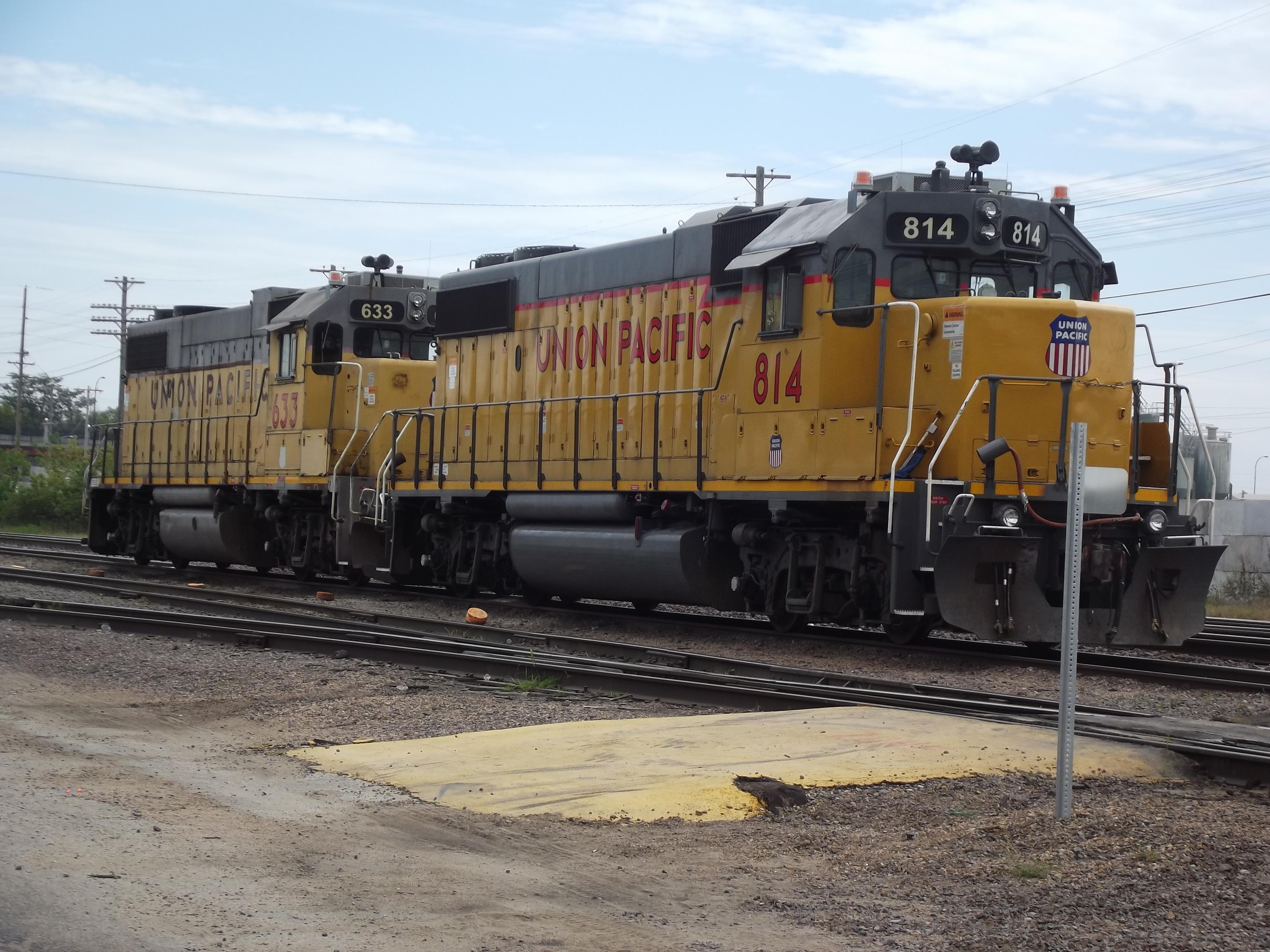
Photo by Michael Hooper

I spent several months studying trading techniques. I talked to my broker about the requirements at Charles Schwab. I was told I need a minimum $25,000 in my account to do day trading.

After Union Pacific's third quarter earnings came out, the stock fell from $93 per share to $88 per share. I've owned UNP for many years and know the company well. I like the stock because I feel the downside is minimal at this point. The company is strong financially and its volumes have improved in recent weeks. I feel there is a bottom around $88 per share.

In the third quarter, UNP offset the loss of coal volumes with gains in productivity and pricing. Union Pacific's total traffic was down 2% in Week 43 with 171,009 carloadings. This beats trends early in the year when Union Pacific volumes were falling 9% to 10%. Farmers raised another big crop this year. Grain volumes were up 20% for Union Pacific in Week 43, up 21% fourth quarter to date and up 10% year to date, to 301,108 carloads.

The Big Trade

On Oct. 31, I decided to buy 4,000 UNP shares at $88.6582 per share. I am looking for $0.07 to $0.09 profit per share. Nine cents would yield $360.00 profit. When I placed my first trade, my heart started racing; I was filled with fear and excitement. The stock immediately fell and I was down $900. Yikes. I held on. The stock returned to the $88.60s and then ran into the $88.70s and I sold at $88.7448, for a profit of $320.76 after commissions.

I did a similar trade three more times this week, always in the morning, when there are a lot of bulls and bears chasing this stock. The stock moves quickly up and down. I have to stay in front of the trade or I will lose. I avoided trades late in the day in case there was not enough time for the stock to move. I made $94.36 on my second trade. I made $334.35 on my third trade.

The range in Union Pacific is staggering. In the first hour of trading Friday, the stock opened at $88.70 but quickly fell to $88.38, then reversed course and climbed all the way to $89.23 before pulling back. All I need is $0.09, and I'm good. I bought 4,000 shares at $88.78 and then quickly sold at $88.802. I made $62.36 after commissions. I should have held on a little longer.

Each time, I held the stock less than 20 minutes, sometimes only a few minutes.

I made a total of $811.83 in profit. I will have to pay taxes on short-term gains, which will likely be around 30%, which would reduce my profit to around $568.28.

What's interesting is that while I did these trades four times in five days, these trades could have been duplicated multiple times each day. My first trade could have been duplicated three times in the same day, I only participated in the trade once that day. My friend Chris Wright, a Topeka businessman, said the real challenge for any investor is holding onto a profit. Too often we quickly gamble it away. So after each profitable trade, I walked away. I had no losing trades, although I was prepared to sell out and cut my losses to -$1,000 if I had to.

Jesse Livermore, the famous trader behind the book, "Reminiscences of a Stock Operator," also traded heavily in Union Pacific in the early 1900s, he bought and sold thousands of shares of UNP. He was actually alive and working when The Chicago Cubs won the World Series in 1908. Livermore gambled big and became a millionaire but lost his fortune near the end of his life. I don't want to become the next Jesse Livermore, no way.

But his trading observations are useful. "It takes a man a long time to learn all the lessons of all his mistakes. They say there are two sides to everything. But there is only one side to the stock market; and it is not the bull side or the bear side, but the right side," says page 36 of "Reminiscences of a Stock Operator."

Day trading is extremely stressful and not for the weak at heart. The best trader is a master of Intellect/Emotion, meaning the trader operates with a set of rules that works for him or her and sticks by them, regardless of emotion. I have a loss limit of $1,000. If a trade goes south, I will sell out and cut my losses. I think it is best to focus on one stock that you know very well. You understand the company, you can predict its earnings and you know when it is overvalued or undervalued.

I think it is possible to incorporate day trading into part of a much larger portfolio strategy, but I wouldn't recommend day trading for most investors. My default strategy is to remain invested in my core holdings of stocks, bonds and ETFs. I am overweight the S&P 500 because its performance beats most money managers. When I see a core holding like Union Pacific fall into a trading range, I might consider a possible day trade. If the market is ripe for a good trade, I will do it. But if conditions look sour, I'm staying away.

I like Schwab's StreetSmart Edge technology because it shows all the bids and asks with some market depth. This helps me get a feel for where the trades are going. When I place a trade I watch it like a hawk. I will not leave my desk until it is done. If the stock is volatile, it is possible to enter and exit my trades in less than 10 minutes. There is a lot of volatility in the market because of the presidential election. And volatility is good for traders.

Wednesday, October 19, 2016

How To Retire at Age 30


By Michael Hooper

When I was in my 20s, I paid off $2,200 in credit card debt and saved up $5,000. I quit my newspaper job, moved to Europe and retired. I lived cheap for a long time in Greece. This was a life-changing experience for me. Now 53, I look back at my diary from 1990 with amazement and wonder at all the places and people I met in Europe. I did not have a real job for six months, although I did work part-time at a hotel in Athens.
Michael Hooper in Santorini, Greece, 1990

Today, youth face much greater challenges. I only had $6,000 in debt from college loans when I graduated in December 1987, and my monthly payment was just $55.00. Today, students are graduating with astronomical levels of debt. Many youth will be paying student loans for the rest of their lives. If you have $30,000 in student debt, you could pay it all off in five years with aggressive payments of $566.14 per month (5% interest).

Let’s say during that same five-year period, you save $433 per month, and you automatically invest the money into the S&P 500 every month through a brokerage account at Charles Schwab or TD Ameritrade. At a 10% annual rate of return, you will have $34,113 in five years.

Let’s say you start doing this plan immediately after college at age 25. This five-year plan requires $1,000 per month going into debt service/investments. You may have to work overtime or a second job. By age 30, you are debt free and have a substantial investment account.

You move to one of the best cheapest places to live, like Thailand or Vietnam or Argentina, where you only have to spend $300-$400 per month for an apartment. You live cheap, you make your money last a long time.

I met several people who lived many years on their savings. When I was in Greece, I met a 32-year-old chemist from Chicago who had saved enough money for two years of travel. I lived six months on $5,000 in 1990. I could have stayed working at the hotel in Athens, and extended my trip, but I wanted to return to America for a regional reporting job. Plus I was broke and tired of living like a vagabond and missed my friends and family in the states. I had been sleeping on park benches in Barcelona.

Americans will have to sacrifice to live below their take-home income. But this can be a good thing. It's cheaper to cook food at home than to eat out. And the food at home is probably better for you. I know a poor man who is extremely healthy because he lives on rice and beans and rides his bicycle daily and works in his garden. Steady incomes don’t necessarily translate into healthy living. Two thirds of Americans are overweight.

Dreamers who are serious about retiring early must live cheap. They work hard at their jobs.  They take a sandwich with them to work and snack on popcorn. At the end of each day, they cook a good meal for themselves. Their passions don’t cost much. A walk through the park with the dog, a stroll through the garden, a trip to the library -- all these cost nothing, no money spent, yet you might witness a glowing sunset or find a great movie to borrow from the library.

Why did I retire at age 26? To see the world, to experience new cultures, new people, new ways of thinking and living. I wanted to be like Hemingway and Fitzgerald, I wanted to live overseas and look back at America. I wrote several short stories that revealed in me some truth about who I was and what I was doing with my life. I went to Europe to suck out all the knowledge and wisdom of thousands and thousands of years of civilization. I did not want to look back on my 20s and 30s and say I did not live.

I discovered a secret for better living in that special experience. To live each day like an adventure, like I’m going on a special trip, to see a new place, to carry on a new conversation, to go somewhere I had never been before, with people I never knew, and to cherish and love my family, my friends and my home.


Sunday, October 9, 2016

Menninger Leaves Lasting Mark On Topeka

By Michael Hooper
The ghost of Menninger’s past is still seen in places all over Topeka. The hospital for the treatment of the mentally ill operated in Topeka for 77 years before leaving in 2003 for Houston.
Siebolt Frieswyk, a former Menninger psychotherapy instructor, remembers seeing nearly all of the city’s landscape from the Tower building on Menninger Hill in west Topeka. He worked there with professionals including Harriet Lerner, Irwin Rosen and Stephen Appelbaum.
Visiting scholars to the Menninger Clinic included Margaret Mead, Anna Freud and Aldous Huxley — friends of Karl Menninger, co-founder of the Menninger Clinic.
Menninger’s continuing education programs for psychiatric residents, psychologists, social workers and therapists attracted students to Topeka from across the world — the United States, Europe, South America, Japan and Mexico.
“It was an atmosphere of enormous intellectual excitement,” Frieswyk said. “This had the feel of a major university.”
Menninger had a profound affect on the field of psychiatry, while benefiting Topeka economically, culturally and socially. Menninger’s acceptance of the mentally ill became a social norm in Topeka.
Menninger employed about 1,100 people. The organization provided professional, steady, well-paying jobs with good benefits.
Employees were paid a living wage, Frieswyk said. And each employee — from the lunch counter server to the top psychiatrist — were all on the same mission of helping the mentally ill.
“It was all about the patient,” said Ira Stamm, a Topeka psychotherapist in private practice who worked at Menninger from 1972 to 1995.
Patients who came to Menninger often stayed long-term, up to a year or more. Some patients loved Topeka so much, they stayed there.
Local theater, music and the arts were influenced by Menninger employees.
Frieswyk said the Topeka Civic Symphony continues to have several former Menninger staff members as instrumentalists playing violin, viola, cello and trumpet. The Topeka and Shawnee County Public Library benefited from the creative input of Menninger staff.
Topeka Civic Theater staged a presentation of “Whose Life Is It Anyway,” whose director was a Menninger psychoanalyst. Many of the principal roles were played by Menninger clinical staff. At the end of the run, the meaning of the play was discussed by a panel of Menninger psychiatrists.
Faith communities have also been enriched by the participation of Menninger musicians and vocalists. Mary Cerney, a Menninger staff psychologist, was choir director and organist for Most Pure Heart of Mary, where she also offered grief counseling. She was the first nun in the history of The Roman Catholic church to complete full training as a psychoanalyst, Frieswyk said.
Menninger’s legacy is so rich, many of these former Menninger employees have come back to Topeka this weekend for a reunion.
One of the reasons Menninger was such an economic powerhouse was its national reputation as a place where you go for help if all other efforts have failed. Menninger used an extensive diagnostic method that involved a battery of tests and patient interactions with a team of professionals, said Stamm. The diagnosis typically took a week, sometimes two weeks.
In 1979, Richard Carpenter, of the 1970s hit group The Carpenters, reportedly kicked his addiction to Quaaludes at the Menninger Clinic, according to a Jan. 1, 1989, Chicago Tribune article by Frank Sanello.
Gene Tierney, a popular actress from 1940 to 1964, came to Menninger in 1958. She remained there for a time and worked as a sales girl in a local dress shop as she integrated back into society.

Illustrious history
Karl Menninger co-founded the Menninger Clinic in 1925 with his brother, William, and his father, C.F. Menninger. Karl led the agenda of American psychiatry in the 1930s and 1940s, publishing multiple books like “The Human Mind,” “The Vital Balance” and “Man Against Himself.” Karl was known for his difficult, irascible personality, but he had a knack for engaging patients, said the late Irving Sheffel, longtime administrator at the Menninger Clinic, in previous interviews. Karl understood the power of hope in a patient’s recovery.
With an agreement with the VA in late 1945, the Menninger brothers were able to use the Veterans Administration Hospital as a training center for psychiatric residents.
The Karl Menninger School of Psychiatry and Mental Health Sciences trained hundreds of psychiatric residents after World War II.
Psychiatrist Samuel Bradshaw completed his residency at the Menninger Clinic. He was chief of psychiatry at the VA in Topeka for 20 years.
Bradshaw said that when he arrived at Menninger, he was impressed with employees’ compassion and kindness. The clinic was filled with engaging, empathetic intellectuals who cared deeply about the mission of helping people with mental illness. Bradshaw quickly made friendships with several professionals who shared his love of psychiatry and music.
“It felt like home,” he said.
Bradshaw said the Menninger Clinic way of treating patients was implemented at the VA. Much has changed throughout the years with the treatment of mental illness in America, but the VA still has resources to treat veterans suffering from PTSD and other illnesses, he said. When treated, these veterans are less likely to end up in prison, he said.
Topeka lost the Topeka State Hospital in 1997; Menninger left six years later. Many people who would have been treated at either place now end up in prison, Bradshaw and Frieswyk said.
Prisons are full of the mentally ill, they said — a great tragedy.
Today, pharmacology has supplanted psychotherapy. Research at universities is often funded by drug companies. As a result, universities cater to drug companies in order to get research grants, Frieswyk said.
Sigmund Freud was a huge part of the Menninger way, and the founder of psychoanalysis was given a large bust in the Tower building at one time. Menninger’s brand of Freud’s psychoanalysis was dynamic and interactive. Freud’s mantra that a healthy person is able to love and to work was taken to heart. Karl Menninger had patients working in arts, crafts and gardens. Treatment was not only for the mind, but also for the body and soul.
A frequent consultant to Menninger was John “Jock” Sutherland, a prominent Scottish psychoanalyst who said that, “We are in the growth and development business.”
It is a delusion to think that a pill can solve a person’s mental illness, Bradshaw said. So much more of the person needs to be examined and treated.

The emigres
In the 1930s and ’40s, Menninger hired numerous Eastern Europeans. Their children attended local schools and families joined local churches and Temple Beth Sholom. They brought with them their love of opera, orchestra and theater and engaged in local groups that supported their passions, interests and beliefs.
Topeka is blessed with a rich theater community, including one of the oldest, longest-running civic theaters in the country. Longtime Menninger employee Sheffel gave $1 million to Topeka Civic Theatre.
Partly because of efforts by Karl’s daughter, Rosemary Menninger, Menninger left a significant archive at the Kansas Museum of History. The Menninger family archives, correspondence by Karl and others and letters by Sigmund Freud, William James and Florence Nightingale are there, drawing scholars from around the world to do research.
Many former Menninger employees influenced and worked at several local organizations, such as Valeo, Family Service & Guidance Center, The Villages and Heritage Mental Health Clinic of Topeka. Many private practice psychotherapists in northeast Kansas are Menninger-trained.
On Saturday, Lee Wright and Alice Eberhart-Wright hosted a party for former Menninger employees, called the Gunavardina Reunion. Gunavardina was a social network in the psychiatric community that occurred in the early 1970s as a gathering place to celebrate cultures, food and entertainment. Mahasen DeSilva came up with the name, which means “overflowing with goodness” in Sinhalese. They once had a Brazilian carnival, a French wedding, a Dutch Christmas, Chinese dinners and plenty of singing, dancing and developing lifetime friendships.


Friday, September 30, 2016

A Letter To David Byrne

David,
I read four bicycle books this summer, Bicycle Diaries by David Byrne; The Story of the Giro d'Italia, Volume I, by Bill and Carol McGann; The Rider by Tim Krabbe, and Gironimo! by Tim Moore. The Rider was a speed read like a bike race full of energy. The McGann's Story of the Giro is glorious. Gironimo was a slog, perhaps retracing the very terrible 1914 Tour de Italia put the author in a bad mood.

I just finished reading Byrne's book Bicycle Diaries this morning. Wonderful, insightful, progressive, intelligent, you captured the beauty of a bicycle in everyday living/traveling. Your description of Berlin was fantastic, I loved the pictures of the art exhibits. Byrne's night riding was like another beautiful dimension, the bicycle is taking us to a place I had never been before. Well done.

I also am in my mid 50s. I recently I did an experiment, I quit driving a car for about three years and rode my bicycle only. Since I work from home, this was fairly easy, I could ride to the store, the bar, the coffee shop, the park, concerts, downtown, etc, but I struggled to make it to short-notice, long-distance-away events, so I finally broke down and bought a car last spring.

I had the opportunity to ride a bike through New York City in March, it was wonderful, I road all over Central Park, along the Hudson River, Midtown and Harlem. Two weeks ago, I returned from a bike trip through Cape Cod, a buddy and I rode from Falmouth to Provincetown. We also rode bikes on Nantucket. The environment seems to be winning on Nantucket, as I saw no street lights, no stop lights, no billboards and no chain restaurants. My friend who is a landscaper there says use of chemicals is highly restricted (good!). When leaving on the ferry, I threw a penny into the harbor with the hope I will return there some day...natives say this trick works...but when we were throwing in our pennies, one lady's penny blew back onto the deck, "that is bad luck," my buddy said!

Global warming is a real threat. The bicycle could save our planet. We just need to change our entire way of thinking. Out here in Kansas, too many people are still stuck in automobile land, partly because of our long distances from one another. I like Penalosa's thoughts in your book, let us make the community friendly to children first, if kids are safe and comfortable, we have a community, let us build our community from there. We have created new "pocket parks" in downtown Topeka, we have new bike trails and new bike lanes, we have a progressive Community Cycle Project that helps rebuild bikes for people in need of a bike; and the city has a bicycle department with 200 bicycles for rent, located in various parts of the city. And artists have created a new art district in an old part of town, called NOTO, which is very bike friendly. So we are making progress, but still have a long way to go. My hope is that our community will become transformed by cyclists, we have a few cyclists in leadership positions, they are really trying to make a difference.

If you ever are in Topeka, Kan., please look me up. We could go for a bike ride!

Thank you for writing a good book! I enjoyed it.

Take care and happy cycling!

Michael Hooper
Topeka, Kansas


Saturday, July 23, 2016

I Don't Pray for Money

"I don't pray for money. I pray for wisdom. I would rather have one honest dollar and wisdom than $1 million and no wisdom. Without wisdom, I probably would lose the $1 million and my life. With wisdom, I can build a fortune and a happy life."
--Michael Hooper 7-13-2016


"We can hope for a better tomorrow, but we have only today to make our dreams come true," said Michael Hooper, July 3, 2016.

"Nature Creates Homes"
--Michael Hooper, July 7, 2016


Guns Take Away Our Freedom

The common thinking about guns is they protect us from our enemies and ensure our freedom and safety. This is a fallacy. A truly responsible gun owner -- a person on alert -- is actually missing out on life. Why? Because a person carrying a gun must have a hyper-consciousness, a super awareness, to sense the enemy and shoot to kill if the situation requires it. If you are the least bit unaware, you might get shot yourself, or someone might take your gun from you and use it against you. Achieving a state of hyper consciousness requires tremendous commitment and devotion to safety. Why does this limit your freedom? Because if you are spending all your time managing your gun and thinking of ways to use it against your enemy, you are not enjoying the moment. You are at a rock concert, you are thinking about your gun and how to use it. Can you truly enjoy the moment with a revolver in your pants? Some people are comfortable with a gun, but get too comfortable with your gun, its value goes down substantially. Now people are willing to take the risk and responsibility of owning and carrying a gun. This step increases fear. The higher number of guns in circulation, the higher levels of fear and distrust. Cops fear black people are going to kill them even though their fear is often misplaced. As a result, cops have shot black people who are no threat at all. There is multiple cases of this happening. The end result is more distrust. Black people are protesting, rightfully so, to stop the cops from shooting them. Black lives do matter. All lives matter. Regardless of race, all peoples in America are under a threat that didn't exist 30 years ago. We have a mass shooting in America every day. Escalating violence has led to more gun ownership, and therefore more fear. I know someone who said he was worried his shotgun and revolver would not be sufficient to fight off 15 people invading his house. So he acquired an AR15. But is there a real threat of 15 people coming into your house? I don't think so. Burglaries usually don't involve more than two people. But my friend's fear is driving him to purchase yet more weaponry. I am willing to take the risk of not owning a gun. First of all I don't want the responsibility of owning a gun. I have children and young nieces and a nephew. I eliminate the risk of accidental shooting by having no gun in my house. There is too much access to guns. In many homicides and accidental shootings, if there had been no gun, there would have been no death. No gun, no death. Without a gun, I am free to absorb the moment, free to look at the concert and enjoy the show, free to listen to a conversation and follow it with real sincerity. The highest compliment you can pay a person is giving your ear, fully listening to their words and feelings and reassuring them you can empathize and understand. But if there is too much noise and fear in and around your brain, you can't pay attention, you are too busy worried about killing the enemy. The enemy lives in our brains. The enemy is fear. Fear is a weed that can't be killed with more guns. I don't feel safer when a person carries a semi-automatic weapon into the grocery store. Only greater understanding and higher levels of trust will produce peace. The gun limits that. Freedom is the ability to live without fear and restraint, the ability to look at a person in the eye and see humanity and share life as a divine gift, to breathe the same air and know that we are humans together. Let us find a way to stop guns from being the barrier to freedom and shared humanity. Let us live freely without restraint, with the hope to move forward in the direction of our dreams of a safe and viable community, nation and world. Put down your guns. Peace can be had, if we all work together to achieve this goal.